
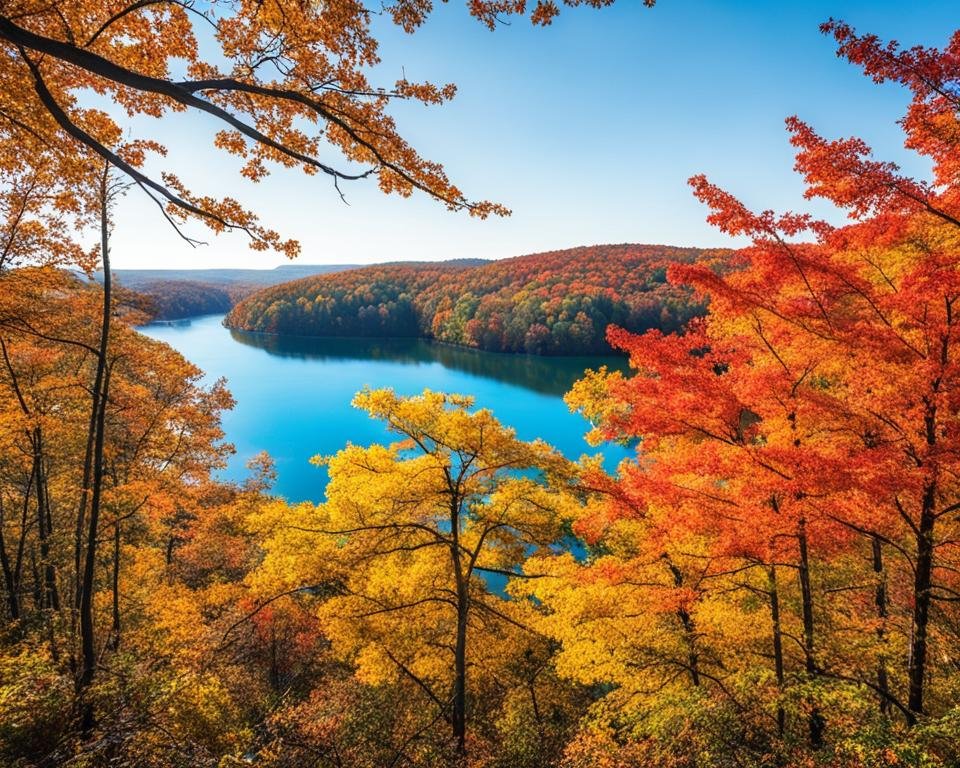
Montgomery Bell State Park rewards photographers who slow down. Forest edges, lake reflections, historic structures, changing weather, and seasonal color can all work—but the strongest images usually come from matching light and conditions to one location instead of rushing between many stops.
Begin with a responsible plan
- Use the park map and scout public viewpoints in daylight.
- Stay on established trails and durable surfaces.
- Never approach, feed, call, or surround wildlife for a photograph.
- Do not move natural or historic objects to improve a composition.
- Confirm current rules before commercial shoots, drones, large equipment setups, or organized sessions.
Lake photography
Lake Acorn offers reflections, changing skies, shoreline detail, and a strong foreground for wider scenes. Wind, water level, season, and time of day change the result. Keep equipment secure near water and do not block paths or access points.
Forest and trail photography
Overcast light can reduce harsh contrast beneath the canopy. Look for layers, curves in the trail, bark texture, fungi, leaves, and the relationship between light and topography. Choose a route through the hiking guide and carry only equipment you can manage safely.
Historic places
Context matters. Wider images can show how a structure sits in the landscape, while details can reveal construction and age. Read the park and history guide before photographing historic sites, and treat religious or commemorative spaces respectfully.
Wildlife and birds
Use binoculars or a longer lens, remain quiet, and accept that the animal may never move into the frame you imagined. Review the nature and wildlife guide and birding guide.
Useful equipment
- A phone or camera you already understand
- Lens cloth and simple rain protection
- Spare battery or power bank
- Polarizing filter if you know how to use it around water and foliage
- Tripod only where it can be used without obstructing others
- Water, suitable footwear, and a small first-aid kit
Timing and safety
Golden-hour light can be attractive, but arriving before dawn or leaving after sunset adds navigation and safety concerns. Know access hours, carry a light, share your plan, and allow enough time to return before conditions deteriorate. Consult the trail safety guide.
A simple photography day
Start with one early lake or landscape location, walk a trail during softer morning light, break for lunch, and return to a different habitat later. The one-day itinerary can provide the basic structure, while the seasonal guide helps set realistic expectations.
Check current park rules and notices on the official Tennessee State Parks page.
A better way to use this guide
Make the photograph without taking over the place
Soft light around the lakes and woods can be beautiful, but weather, water level and access change. Build the composition around what is present rather than promising a seasonal scene that may not appear.
Keep tripods and groups clear of paths, respect ceremonies and other visitors, and never move plants, rocks or historic material for a cleaner frame.