
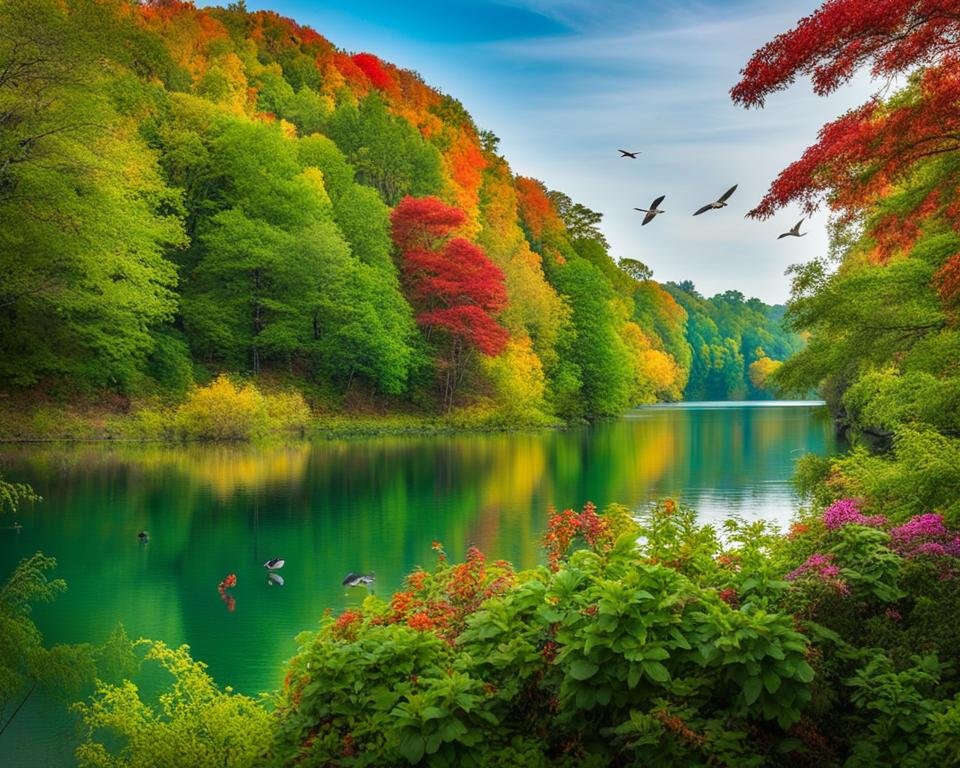
Montgomery Bell State Park gives birders a useful mix of mature woods, lake edges, open areas, and quiet trails. The species present change with the season, weather, and time of day, so the best visit is less about chasing a guaranteed checklist and more about moving slowly through several habitats.
Where to Look
Wooded trails can be productive for songbirds and woodpeckers, while the edges of the park’s lakes may attract waterfowl, herons, and other birds associated with open water. Clearings and woodland edges offer another vantage point, particularly early or late in the day. Use the park map to combine several accessible areas without wandering off established routes.
Best Times for Birding
Early morning is often the most active part of the day, especially in spring and early summer. Spring and fall migration can bring changing combinations of species, while winter makes it easier to scan bare branches and can concentrate activity around food and water. No particular bird is guaranteed, and recent observations are more useful than a static species list.
What to Bring
- Binoculars and, if useful, a regional field guide or identification app.
- A downloaded map, water, and weather-appropriate clothing.
- A notebook or camera for recording observations.
- Insect protection during warmer months.
Responsible Birding
Stay on established trails and observe nests from a distance. Keep voices low, never pursue wildlife for a photograph, and avoid repeated recorded-call playback. Dogs should remain under control and follow posted leash rules. If a bird changes its behavior because of your presence, give it more room.
Combine Birding with a Park Visit
A quiet walk is often the easiest way to cover several habitats. Use our hiking guide to plan a route, explore the Things to Do hub, or extend an early-morning outing with camping or another place to stay.
Current Sightings and Conditions
Bird activity changes constantly. Before a dedicated trip, consult recent community observations and confirm trail or area closures with Tennessee State Parks. Treat public sightings of sensitive species carefully and never disclose an active nest location in a way that could attract disturbance.
Frequently Asked Questions
Is a particular rare bird guaranteed?
No. Seasons and conditions affect every outing, and wildlife sightings can never be guaranteed.
Do I need specialized equipment?
No. Binoculars are helpful, but careful listening and slow observation can make an enjoyable first birding visit.
Can I bird from park roads?
Use designated parking and observation areas. Never stop where you block traffic or create a roadside hazard.
A better way to use this guide
Plan by habitat and hour
Move quietly, keep recordings restrained and let distance protect both the bird and the observation. Early and late light can improve activity, but season, weather and disturbance matter more than a promise of a particular species.
Use the park map to connect wooded edges, lake margins and quieter walks. Record only what you can identify confidently, and never crowd a nest or block a trail for a photograph.