Current conditions: Confirm trail and shelter access with Tennessee State Parks and posted signs. The official trail inventory lists Woodland Shelter Trail at 0.29 mile.
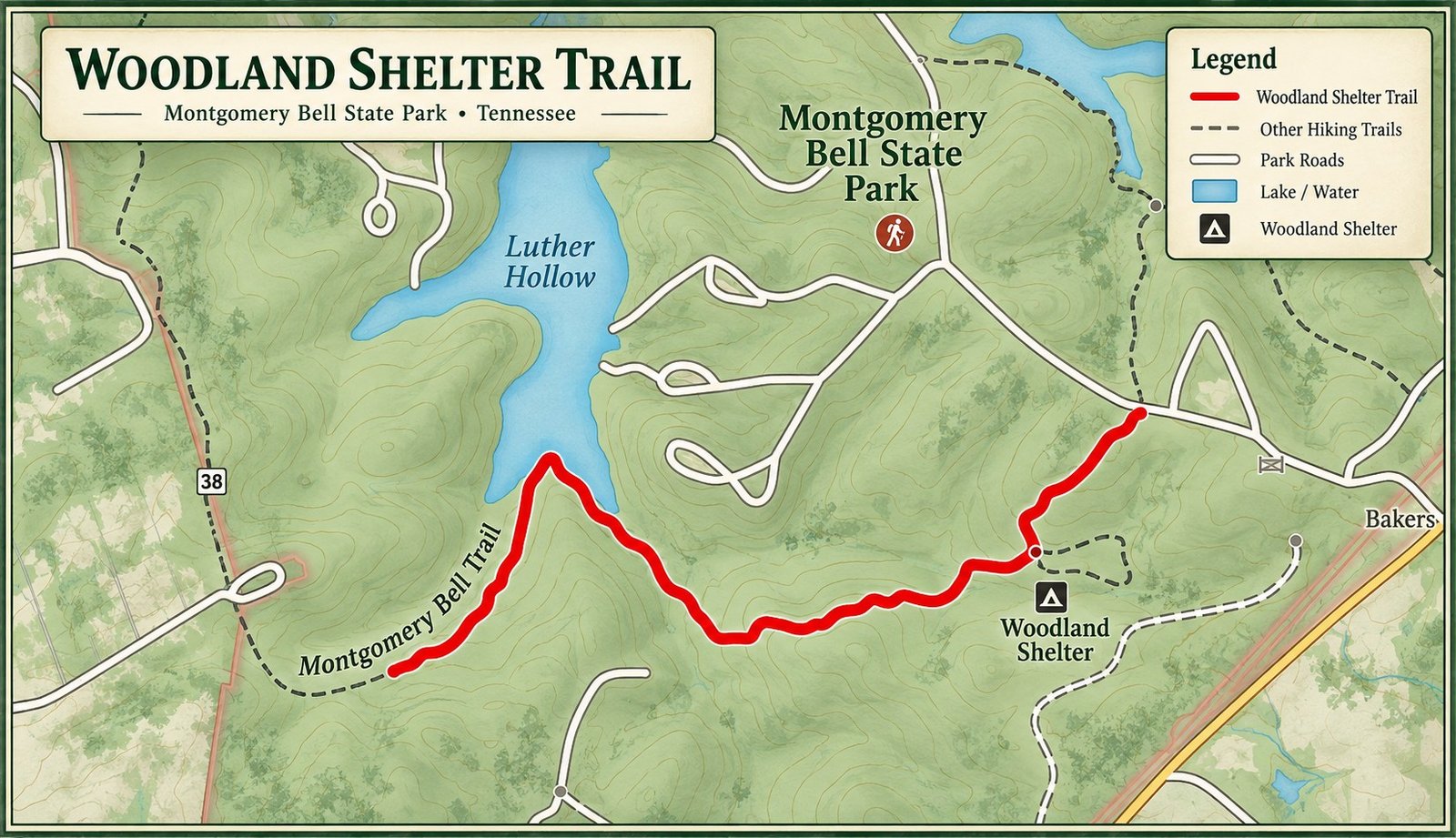
The Woodland Shelter Trail is a short connector with an outsized role. In less than a third of a mile, it leads hikers into the park’s backcountry trail system and toward a shelter used by permitted overnight travelers. It is useful as an access trail, a planning landmark and a reminder that a short distance can still place you in a more remote setting.
What this trail is—and is not
This is not a stand-alone scenic loop with a procession of overlooks. It is a purposeful forest approach. Day visitors may enjoy a quick walk, but its real value is logistical: it helps connect the developed park with the longer Montgomery Bell Trail system.
Planning for the shelter
Do not assume the shelter is available simply because it appears on a map. Overnight use may require a reservation or permit, and rules can change. Confirm availability, check-in instructions, water guidance, fire restrictions and occupancy directly with the park before leaving home.
Footing and navigation
The route is short, but expect natural tread, roots, leaves and wet-season mud. Carry the current map if continuing beyond the shelter area. At every junction, identify the next blaze before moving on; a short connector can become a long mistake when it feeds a larger network.
Water and weather
Carry drinking water and treat any natural source. A mapped stream is not a guarantee. Rain can soften the approach, summer humidity raises water needs and winter darkness arrives early. Pack for the longer route you intend to hike, not merely the length of this connector.
Leave the shelter better
- Pack out all food, trash and hygiene products.
- Do not leave gear or supplies for the next visitor.
- Protect food according to current park guidance.
- Keep noise low and respect other permitted users.
- Use only designated facilities and follow current fire rules.
Connect to the larger trail
Most hikers use this approach as part of a plan involving the Montgomery Bell Trail. Read our overnight trail guide and trail safety guide before committing to a backcountry itinerary.
For a self-contained short walk, compare Jim Bailey or Ore Pit. Return to the Montgomery Bell hiking hub for the full comparison.