
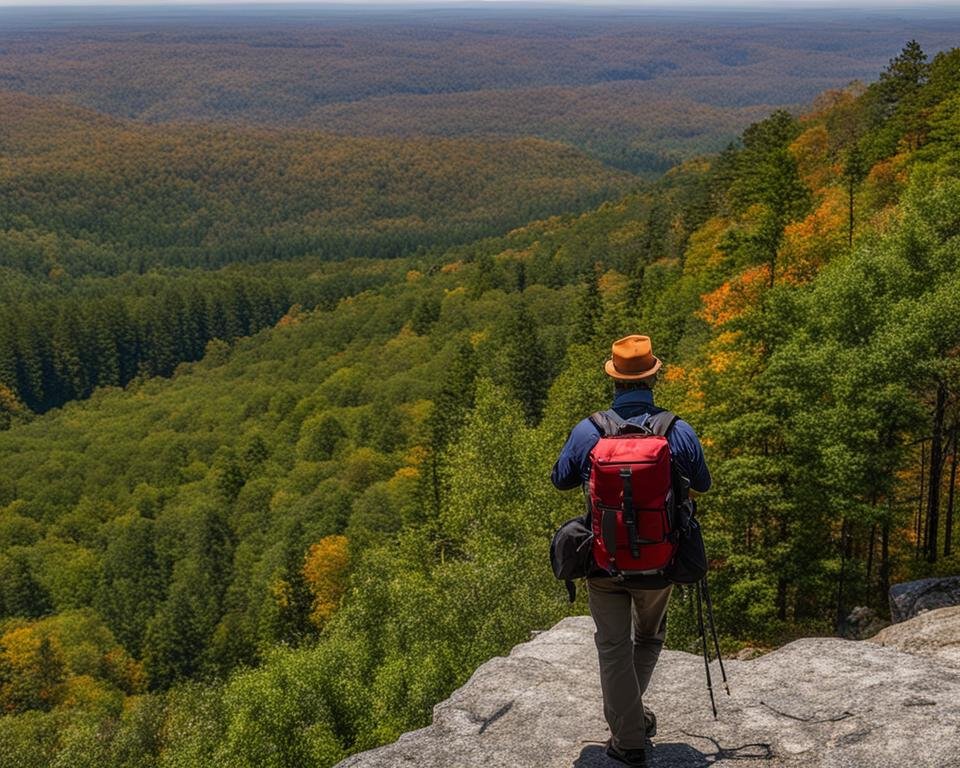
Montgomery Bell State Park trails can feel close to developed park areas, but ordinary outdoor risks still apply. Weather changes, wet surfaces, heat, darkness, navigation errors, and overestimating a group’s ability can turn a pleasant walk into a difficult situation. Preparation should match the route and conditions.
Before starting
- Choose a route using the hiking guide and park map.
- Check weather, trail notices, daylight, and current closures.
- Tell someone your route and expected return time.
- Carry water, necessary food, appropriate footwear, weather layers, a light, and basic first-aid supplies.
- Download or photograph the map; do not depend entirely on cellular service.
Choose for the least-experienced person
Distance is only part of difficulty. Surface, elevation change, mud, heat, stream crossings, pace, and the distance back to the trailhead all matter. Turn around early when someone is struggling; reaching a planned landmark is never more important than returning safely.
Weather and trail surfaces
Rain can make roots, rocks, slopes, and wooden surfaces slippery. Heat increases water needs and can affect children, older adults, and pets quickly. Cold rain can become dangerous even when temperatures do not sound extreme. Postpone the outing when conditions exceed your group’s preparation.
Navigation
Know the trail name and trailhead before leaving. Watch junctions, periodically confirm your location, and avoid following an unofficial path simply because it appears well traveled. If you become uncertain, stop and reassess rather than continuing quickly in a guessed direction.
Wildlife, plants, and insects
Give animals room, never feed them, check for ticks after the hike, and avoid touching unknown plants. Keep pets controlled and follow posted rules. The nature and wildlife guide explains responsible observation.
If something goes wrong
For a life-threatening emergency, call 911 if service is available. Provide the park name, trail, last known junction or landmark, direction of travel, number of people, and nature of the emergency. Conserve phone power and avoid separating the group unless immediate danger requires movement.
Special considerations
Children
Keep children within sight and reach near water, roads, steep ground, and trail junctions. Build in snacks, rest, and an easy turnaround.
Solo hikers
Share a precise plan and return time. Carry redundant navigation and avoid increasing risk simply because no one else is present.
Evening outings
Carry a real light for every person and know access rules. Phone flashlights drain batteries and are a poor primary plan.
Final trail check
Ask four questions before leaving the trailhead: Do we know the route? Do we have enough daylight? Do we have water and weather protection? Is every person comfortable with this plan? If any answer is no, change the plan.
Return to Things to Do for alternatives, or compare seasonal conditions in the best-time-to-visit guide.