
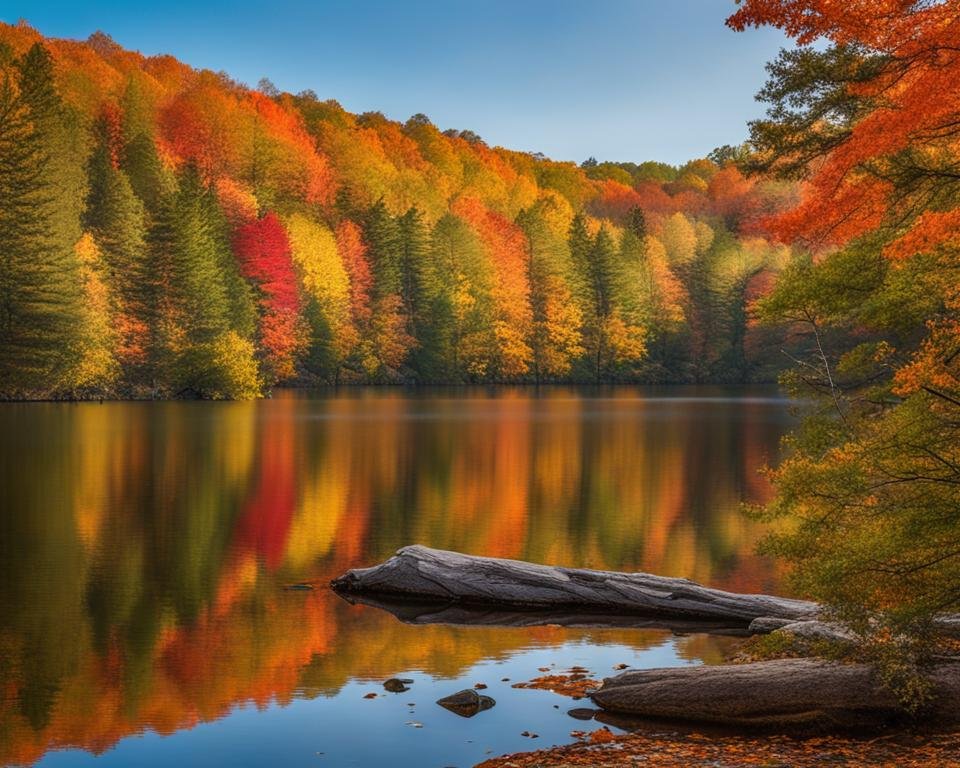
There is no single best season at Montgomery Bell State Park. Spring favors fresh growth and comfortable walking days; summer supports longer daylight and water-centered plans; autumn brings color and busy weekends; winter offers quieter woods and clearer views through the trees. The best choice depends on what you want to do.
Spring: changing conditions and fresh growth
Spring can reward hikers, birders, and photographers, but weather and trail surfaces may change quickly. Carry rain protection, expect mud after wet periods, and check current conditions. Explore hiking, birding, and the nature guide.
Summer: water, shade, and early starts
Long days make it easier to combine activities, but heat and humidity should shape the schedule. Hike early, rest during the hottest hours, carry more water than you expect to need, and verify seasonal operations before planning around rentals or swimming. See Lake Acorn, Boating, and Swimming.
Autumn: color and popular weekends
Autumn combines comfortable outdoor conditions with changing foliage, but peak color cannot be predicted precisely and popular weekends may be busy. Reserve lodging early, begin outings early in the day, and keep expectations flexible. Photography and hiking are natural anchors for an autumn visit.
Winter: quieter trails and a different landscape
Winter can reveal landforms and distant views hidden by foliage. Short daylight, cold rain, ice, and limited seasonal services require a conservative plan. Check conditions, carry layers, and finish well before dark.
Choose the season by activity
- Hiking: spring and autumn often offer comfortable temperatures; every season requires a weather check.
- Lake activities: warmer months may provide more options, subject to current rules and operations.
- Wildlife and birding: rewarding year-round, with different species and behaviors by season.
- Photography: spring growth, summer reflections, autumn color, and winter structure each create different opportunities.
- Overnight stays: compare availability and cancellation terms in the lodging guide.
Seasonal planning checklist
- Check the forecast and park alerts close to departure.
- Confirm hours, programs, rentals, and facility availability.
- Review daylight and allow a generous return margin.
- Bring footwear and clothing for the least favorable likely conditions.
- Use the park map and keep a shorter alternative ready.
Build the rest of your visit through the Things to Do hub or the one-day itinerary.
A better way to use this guide
Every season changes the tradeoff
Spring can bring fresh growth and unsettled weather; summer asks for heat-aware timing; autumn draws visitors to changing color; winter opens views through the woods but shortens daylight. None of those patterns guarantees conditions on a particular date.
Choose the season for the experience you value, then use a current forecast and park notice close to departure.