
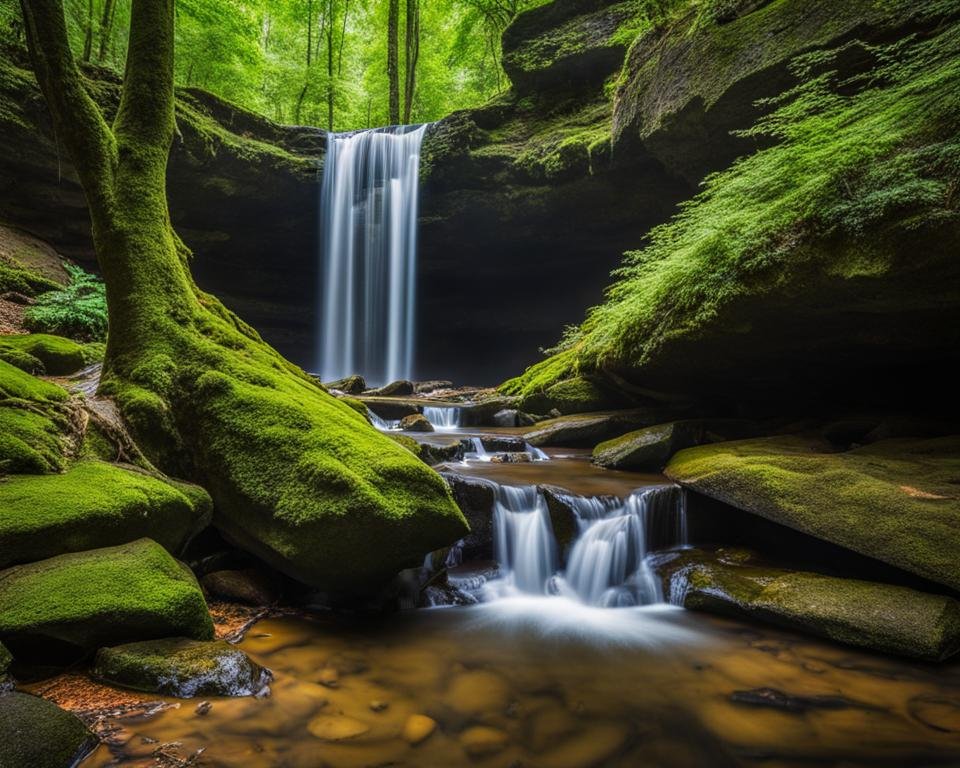
The quieter side of Montgomery Bell State Park is not a collection of secret locations. It is found by visiting familiar places at a slower pace, choosing less-crowded times, and paying attention to forest, water, history, and seasonal change. This guide avoids sending visitors off trail or publicizing sensitive locations.
Find quiet without going off trail
Begin early, visit on a weekday when possible, and choose an established route that fits your ability. Pause at ordinary overlooks, lake edges, and trail junctions rather than rushing toward a named attraction. Use the hiking guide and park map.
Look beyond the obvious view
Notice how ridges differ from moist hollows, how wind changes the surface of a lake, and how historic land use shaped today’s forest. The nature and wildlife guide and ecology guide provide useful context.
Explore the park’s history
Historic sites become more meaningful when you understand their connection to the iron industry, Cumberland Presbyterian heritage, and public recreation development. Read the park and history guide before visiting.
Choose a different lake experience
Instead of trying to see every lake, choose one setting and spend time there. Compare Lake Acorn, Lake Woodhaven, and Creech Hollow Lake in the park lakes guide.
Responsible low-crowd exploration
- Stay on established routes and respect closures.
- Do not create or follow informal social trails.
- Keep sensitive wildlife and plant locations private.
- Leave historic and natural objects untouched.
- Carry out every item you bring.
- Move elsewhere when your presence would crowd another visitor or animal.
A quiet half-day plan
Start with a short morning trail, spend late morning at one lake, and finish with a history stop or picnic. The goal is depth, not a checklist. For a fuller plan, use the one-day itinerary.
A better way to use this guide
Quiet does not mean secret
The most rewarding quieter places are legitimate trails, lake edges and historic corners visited at a slower hour. This guide will not publish off-trail shortcuts, fragile sites or “secret” locations that encourage trespass or damage.
Use established routes, yield generously and leave historic and natural material where it belongs. The value is attention, not exclusivity.